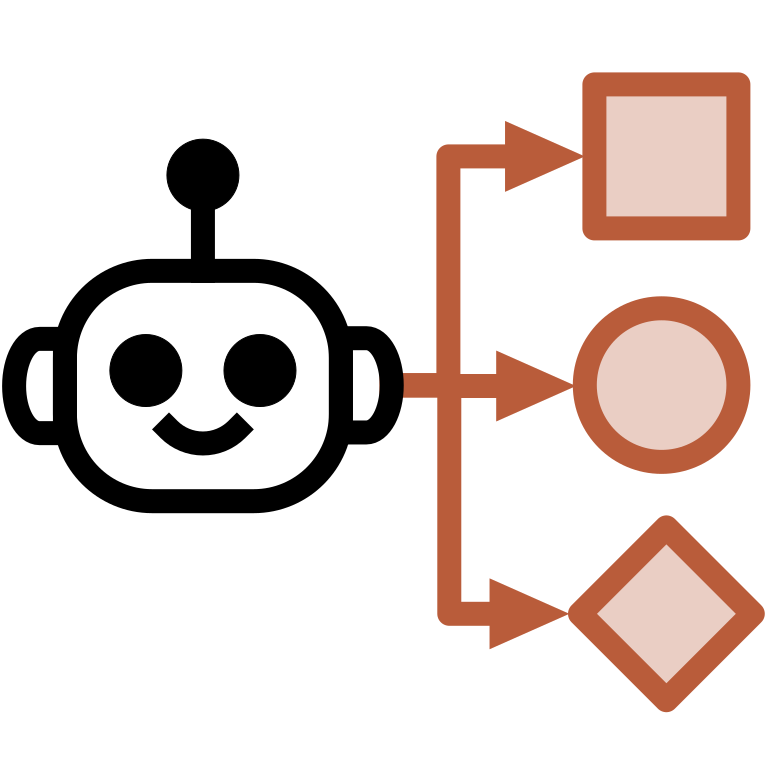
Summary
An approval gate can already offer refine (RFC 0183), but nothing says what a refine does: on every host measured it ends the gate, and the only way to act on the reviewer's feedback is to start a fresh run that repeats every upstream step. This RFC adds a declared, bounded loopback: a WorkflowEdge from the gate back to the node that produced the artifact, marked loopback: { on: "refine", maxIterations }. When the reviewer refines, the host re-runs that region of the graph, hands the producer every earlier round's artifact and feedback rebuilt from the event log, and asks the gate again under a new interrupt key. The cap is required and is never "unlimited"; when it is spent the gate stays open without refine (the default) or a further refine fails the run with a typed error, as the author chooses.
Motivation
Who hits it
Book AI (a tenant product on openwop-app) shows a candidate passage, a title or a selection to the author through core.chat.approvalGate, with three choices: accept, reject, and "Another option". "Another option" is a refine. Its chains are two nodes, candidate → review. Today a refine returns {decision: "refine", approved: false} and the gate ends; Book AI's workaround ends the run and starts a fresh one with the feedback, which re-runs every upstream step on the author's paid model key, loses the run's history, and cannot be replayed as one unit. Their stated need (2026-11-04): re-enter candidate, hand it every prior round oldest first (the feedback text and the candidate it replaced, so it does not repeat itself), cap at three rounds, and when the cap is spent keep the gate open with accept and reject only, without failing the run.
This is the general shape of every "generate → review → revise" loop: content drafting, code review bots, design critique, plan approval.
What the corpus says today
Measured at openwop aebc4a84:
spec/v2/core/interrupt.md§Re-entry and resume values already requires a per-visitkey: "a later execution of the node, reached over an edge, MUST derive a different key". So re-asking a gate is specified. Nothing specifies how a run gets back to the gate's producer.- §Approval lists
refinewith itsrefineFeedbackand says nothing about the gate's outcome. RFC 0223 settledrejectonly. schemas/v2/workflow-definition.schema.jsonsettings.maxLoopbackIterations(min 1, default 5) is an authoring hint the protocol does not enforce (openwop#1748, closed as reading 2: "a future additive RFC may bind it"). The eventworkflow.loopback-limit {nodeId, iterations, limit}is registered with no rule that emits it.- Undeclared cycles are host-defined. The v2 reference host runs them, bounded only by
configurable.run.recursionLimit; openwop-app refuses them (cycle_detected); MyndHyve runs them with per-node caps. A loop authored on one host is unbounded, bounded differently, or refused on another.
What the hosts do
| Host | A gate's refine | Loop bound |
|---|---|---|
| openwop-app | core.approvalGate completes with the resume value as output; core.chat.approvalGate completes with decision: "refine". Neither re-enters anything; a back-edge is refused unless one end is core.dispatch or a supervisor. | core.chat.approvalGate maxRequestChangesIterations, where the default 0 means unlimited. |
| v2 reference host | Completes; a plain back-edge can route it. | recursionLimit only. |
| MyndHyve | Completes; plain back-edges re-fire. | Per-node maxRequestChanges. |
Why the spec is the right place
A loop changes the event log every consumer reads (several node.started per node, several interrupts per gate), replay and fork must reproduce it, and a chain pack that loops must behave the same on every host that admits it. Without a declared shape, a chain author cannot write a bounded loop portably: the bound lives in vendor node config whose zero value means "forever" on one host.
Proposal
Definitions
- Loopback edge. A
WorkflowEdge(or a chainFragmentEdge) carryingloopback. ItssourceNodeIdis the gate; itstargetNodeIdis the target. - Forward graph. The definition's edges with every loopback edge removed.
- Region. The target, the gate, and every node on a forward-graph path from the target to the gate.
- Round. One taking of the loopback edge. Rounds are counted per loopback edge from 1.
§A — Shape
WorkflowEdge.loopback (and FragmentEdge.loopback) is a closed object, $defs/EdgeLoopback:
| Field | Type | Required | Meaning |
|---|---|---|---|
on | "refine" | yes | The approval action that takes the edge. This revision admits only refine. |
maxIterations | integer, minimum: 1 | yes | The most rounds this edge may be taken in one run. There is no default and no zero: a loop with no bound cannot be declared. |
onExhausted | "withdraw" | "fail" | no, default "withdraw" | What happens once maxIterations rounds have been taken (§D). |
historyInput | string (a port key) | no | When present, the target receives the round history on this input port (§C.4). |
A loopback edge MUST NOT carry condition, sourceOutput, targetInput or triggerRule. Which settle takes it is decided by on, and what it delivers by historyInput, so none of the four has a meaning here.
§B — Admission
The cycle exemption, exactly. v2 definition validation refuses cycles on hosts that do not run them. This RFC exempts one edge kind and no other: a declared loopback edge MAY close a cycle, and only from an approval gate back to an ancestor of that gate. Every other cycle keeps its host-defined treatment.
A host that advertises capabilities.loopback (§E) MUST refuse, with 400 validation_error, at registration, instantiation from a chain, and run creation with an inline definition, a definition in which:
- the forward graph has a cycle;
- the target is not an ancestor of the gate in the forward graph;
- the region is not closed: some node of the region other than the gate has an outgoing forward edge to a node outside the region;
- two loopback edges have regions that share a node;
- a loopback edge's
maxIterationsexceedscapabilities.loopback.maxIterations; - (SHOULD, not MUST) the gate is a node the host can determine will never raise an
approvalinterrupt offeringrefine. What a host can determine statically is host-judged, so this item is a SHOULD.
Edges from outside the region into it are allowed; their sources are not re-run. A host that does not advertise capabilities.loopback MUST NOT run a loopback edge as a plain cycle or drop it. It refuses the definition, with capability_required or validation_error; a host validating against the closed v2 WorkflowEdge of an earlier suite already answers validation_error.
settings.maxLoopbackIterations is unchanged: it MUST NOT admit a cycle or bound a loopback edge.
§C — Taking the edge (home: run-event-payloads.schema.json $defs/nodeCompleted.loopback and $defs/EdgeLoopback)
When the gate's approval interrupt resolves with action: "refine" and the loopback edge has taken fewer than maxIterations rounds:
- The gate completes, marked. The gate's
node.completedMUST carryloopback:{ edgeId, targetNodeId, round, rearmed }, whereroundis this taking's 1-based number andrearmedlists every region node innodes[]order. The marker is the only record of the decision: the host MUST decide a re-arm from it, never by re-evaluating the resolution, on replay, fork and recovery. - Nothing leaves the region. For this settle the host MUST NOT evaluate the gate's other outgoing edges. No node outside the region changes state, and none is skipped.
- The region re-arms. Every region node returns to pending, its previous outputs no longer feed any edge. The target becomes ready against its incoming forward edges, whose sources keep their recorded outcomes. Each region node then executes again as a new visit:
node.startedagain, and for the gate a newinterrupt.requestedunder a newkey(interrupt.md §Re-entry and resume values, unchanged). - History. When
historyInputis declared, the target MUST receive on that port an array with one entry per round taken so far, oldest first:
``json { "round": 1, "outputs": { "candidate": "…" }, "refineFeedback": { "scope": "whole", "text": "Darker, and shorter." } } ``
Each entry is a closed object:
| Field | Type | Present | Value |
|---|---|---|---|
round | integer >= 1 | always | the round this entry records (the marker's round) |
outputs | object | always | the target's own node.completed.outputs from that round, i.e. what the reviewer was shown, as the target produced it. A single-port producer's value is outputs.<port> (Book AI: outputs.candidate). |
refineFeedback | object | when the resolution carried it | the gate's interrupt.resolved.refineFeedback from that round (RFC 0183 shape; free text is refineFeedback.text) |
The array has exactly one entry per round taken, so its length is at most maxIterations. The host MUST rebuild the array from the run's event log. It MUST NOT add timestamps, principals, run ids or interrupt keys, so the same rounds yield the same bytes in any run, replay or fork. On the target's first visit the port receives [].
Size cap. A host advertising capabilities.loopback MUST advertise maxHistoryEntryBytes (§E), and it MUST be at least 4096 so a host cannot starve the loop. A round's size is the UTF-8 byte length of the JSON Canonicalization Scheme (RFC 8785, JCS) serialization of its recorded node.completed.outputs; every host measures the same bytes. When that size exceeds maxHistoryEntryBytes, the entry's outputs MUST be replaced by the typed marker { "truncated": true, "bytes": <that length> }. round and refineFeedback are kept unchanged. The marker is computed from the recorded outputs only, and JCS makes the measurement independent of key order and whitespace, so a replay or fork on any host yields the same entry. A consumer that finds truncated: true knows the round happened and what the reviewer said, not what they were shown.
- Limits still apply. Every re-execution counts toward
recursionLimitandlimits.maxNodeExecutions(runs.md §run section). A retry inside a round stays in that round's visit. - Replay and fork. The round count and each visit's interrupt key MUST come from recorded events (the markers and the gate's
interrupt.resolvedevents), never from a live counter, so a fork taken at round k reproduces round k. Areplayfork reproduces each round from the recorded markers and resolutions. A fork whose prefix ends after a markednode.completedMUST resume with the region re-armed by that marker, not with the gate completed.
When the resolution is any other action, the edge is not taken and the gate settles exactly as it would without one: accept / edit-accept complete it and release its forward edges, and reject follows interrupt.md §Rejection.
§D — Exhaustion
The gate's ApprovalData MUST carry loopback: { round, maxIterations, exhausted } on every visit of a gate that is the source of a loopback edge, where round is the number of rounds taken before this visit and exhausted is round >= maxIterations. Then:
onExhausted: "withdraw"(default). On an exhausted visit the host MUST omitrefinefromactions, and MUST refuse arefineresume with400 validation_error(interrupt.md §Approval already enforcesactionson resolve). No event marks the withdrawal beyond that visit'sinterrupt.requested(whoseApprovalData.loopback.exhaustedistrue); the host MUST NOT emitworkflow.loopback-limitorcap.breachedfor it. The run stayswaiting-approval, and its terminal status is whatever the remaining actions produce:accept/edit-acceptcomplete the gate and release its forward edges,rejectfollows interrupt.md §Rejection. A gate whose only action isrefinecannot be withdrawn; on its exhausted visit the host MUST fail the run as for"fail".onExhausted: "fail".refinestays offered. Arefineresolution on an exhausted visit MUST emitworkflow.loopback-limit { nodeId: <gate>, iterations: maxIterations, limit: maxIterations }, thencap.breached { kind: "loopback-iterations", limit: maxIterations, observed: maxIterations + 1 }, and fail the run withloop_limit_exceededandfailedNodeIdnaming the gate. The interrupt still recordsaction: "refine".
So a cap of 3 allows three refines: four artifacts are shown, the fourth without "refine".
§E — Capability
capabilities.loopback (optional, closed): { "maxIterations": integer >= 1, "maxHistoryEntryBytes": integer >= 4096 }. maxIterations is the host's ceiling for any edge's maxIterations; maxHistoryEntryBytes is §C.4's per-entry outputs cap, measured over JCS. Both are members of the loopback facet (Decided 7.1: homed in spec/v2/declaration.json + spec/v2/facets/, from which capabilities.schema.json is generated). A host MAY set it as low as it likes and MUST advertise the value it enforces (§B.5 refuses above it). Present means the host implements §§A–D. A client MUST NOT submit a definition carrying loopback to a host that does not advertise it.
§E.1 — Loopback edges are not forward edges (RFC 0257, trigger rules)
A loopback edge is not part of the forward graph for any other rule. In particular:
- Trigger rules. A target's
triggerRuleis evaluated over its incoming forward edges only. A loopback edge that is not taken contributes nothing and never makes its targetskipped. - RFC 0257. "Terminal node" is computed on the forward graph: a gate whose only outgoing edge is a loopback edge is terminal. This refines RFC 0257's "a node whose only outgoing edges close a cycle is not terminal" for declared loopback edges. A run that ends after an
accepton such a gate completed a terminal, soskippedTerminalsis absent. A loopback edge never adds a node toskippedTerminals.
§F — Chain packs (home: workflow-chain-pack-manifest.schema.json $defs/FragmentEdge.loopback)
A host MUST carry loopback through chain expansion verbatim, as it does condition and triggerRule. A loopback edge joins two nodes of one fragment; a sub-chain is one node of its parent, so a loopback cannot cross a sub-chain boundary, and a sub-chain node inside a region is re-dispatched on each round as a new child run.
Wire shape changes
schemas/v2/workflow-definition.schema.json:
     "WorkflowEdge": {
       "properties": {
         …
         "triggerRule": { … },
+        "loopback": { "$ref": "#/$defs/EdgeLoopback" }
       },
       "additionalProperties": false
     },
+    "EdgeLoopback": {
+      "type": "object",
+      "description": "RFC 0258 — a declared, bounded loopback. The edge runs from an approval gate back to the node whose output it reviews; a refine re-runs that region (RFC 0258).",
+      "required": ["on", "maxIterations"],
+      "properties": {
+        "on": { "type": "string", "enum": ["refine"] },
+        "maxIterations": { "type": "integer", "minimum": 1 },
+        "onExhausted": { "type": "string", "enum": ["withdraw", "fail"], "default": "withdraw" },
+        "historyInput": { "type": "string", "minLength": 1 }
+      },
+      "additionalProperties": false
+    }
The edge-level exclusions in §A (no condition, sourceOutput, targetInput, triggerRule beside loopback) are expressed with if/then on WorkflowEdge. FragmentEdge gains the same property and the same exclusions ($defs/EdgeLoopback inlined, as EdgeCondition already is).
schemas/v2/run-event-payloads.schema.json:
     "nodeCompleted": {
       "properties": {
         "nodeId": …, "outputs": …, "durationMs": …,
+        "loopback": {
+          "type": "object",
+          "description": "RFC 0258 §C.1 — this completion took a declared loopback edge; the listed nodes re-arm.",
+          "required": ["edgeId", "targetNodeId", "round", "rearmed"],
+          "properties": {
+            "edgeId": { "type": "string", "minLength": 1 },
+            "targetNodeId": { "$ref": "ids.schema.json#/$defs/nodeId" },
+            "round": { "type": "integer", "minimum": 1 },
+            "rearmed": { "type": "array", "items": { "$ref": "ids.schema.json#/$defs/nodeId" }, "minItems": 2, "uniqueItems": true }
+          },
+          "additionalProperties": false
+        }
       }
     },
     "capBreached": { "properties": { "kind": { "enum": [ …, "budget-retries"
+      , "loopback-iterations" ] } } }
schemas/v2/suspend-request.schema.json ApprovalData gains loopback: { round: integer >= 0, maxIterations: integer >= 1, exhausted: boolean }, all required, closed. spec/v2/declaration.json gains the core family loopback with facets maxIterations: integer >= 1 and maxHistoryEntryBytes: integer >= 4096, both required (spec/v2/facets/loopback.schema.json); schemas/v2/capabilities.schema.json is regenerated from it.
Examples
Positive (Book AI's chain, abridged):
{
  "nodes": [
    { "id": "candidate", "typeId": "vendor.bookai.author-suite.nodes.candidate" },
    { "id": "review", "typeId": "core.chat.approvalGate", "config": { "actions": ["accept", "reject", "refine"] } },
    { "id": "apply", "typeId": "vendor.bookai.author-suite.nodes.apply" }
  ],
  "edges": [
    { "id": "e1", "sourceNodeId": "candidate", "sourceOutput": "candidate", "targetNodeId": "review", "targetInput": "artifact" },
    { "id": "again", "sourceNodeId": "review", "targetNodeId": "candidate",
      "loopback": { "on": "refine", "maxIterations": 3, "historyInput": "rounds" } },
    { "id": "e2", "sourceNodeId": "review", "targetNodeId": "apply", "condition": { "type": "truthy", "left": "approved" } }
  ]
}
Negative:
| Definition | Refused because |
|---|---|
"loopback": { "on": "refine" } | schema: maxIterations required |
"loopback": { "on": "refine", "maxIterations": 0 } | schema: minimum: 1 |
"loopback": { "on": "reject", "maxIterations": 2 } | schema: on admits only refine |
a loopback edge that also carries condition | schema: §A exclusion |
candidate → review, candidate → notify, loopback review → candidate | §B.3: notify leaves the region |
loopback review → candidate where candidate is not upstream of review | §B.2 |
any loopback on a host without capabilities.loopback | §B: refused, capability_required or validation_error |
Compatibility
additive:
- Every new property is optional on a closed v2 object; a definition, event or interrupt without it is unchanged, byte for byte. In particular a gate with no loopback edge keeps exactly its current keys, events and
ApprovalData. - A host that does not advertise
capabilities.loopbackkeeps its behaviour, and must refuse aloopback-bearing definition rather than run it as a plain cycle (§B). A host validating against an earlier suite's closedWorkflowEdgealready refuses it. capBreached.kindgains a member; events.md §Growth requires a consumer to accept an unknown registered member.workflow.loopback-limitgains its first emitting rule; its payload is unchanged.- Undeclared cycles stay host-defined. This RFC neither licenses nor forbids them.
Conformance
Existing: v2-approval-reject-disposition.test.ts (leg 8 uses an undeclared reject cycle; unchanged), interrupt-approval.test.ts (refine round-trip; unchanged).
New scenario v2-bounded-loopback.test.ts, gated on capabilities.loopback; inapplicable without it. Fixtures:
conformance-loopback-refine:draft(core.identity, which echoes its inputs) →gate(core.approvalGate, actions accept/reject/refine) →apply(core.noop), loopbackgate → draft{ on: refine, maxIterations: 2, historyInput: "rounds" }.conformance-loopback-refine-fail: the same withonExhausted: "fail",maxIterations: 1.
Requirement id (openwop.requirement.0258.*) | Leg |
|---|---|
refine-rearms | refine once: the gate's node.completed carries loopback {round: 1, rearmed: [draft, gate]}, draft starts again, a second interrupt.requested with a different key, apply never started |
history-from-log | draft's node.completed echo shows rounds: [], then one entry per round with exactly round, that round's outputs and its refineFeedback, oldest first |
approval-data-loopback | each request's ApprovalData.loopback reads {0,2,false}, {1,2,false}, {2,2,true} |
withdraw-refine | after two refines, the third request's actions omit refine, a refine resume answers 400 validation_error, the run is still waiting-approval; accept completes it and apply runs once |
fail-on-exhausted | -fail fixture: refine, refine → workflow.loopback-limit, cap.breached {kind: loopback-iterations}, run.failed loop_limit_exceeded, failedNodeId: gate |
replay-rearms (gated also on replay mode replay) | a replay fork at round 1's marked node.completed reaches the gate's second visit without a new caller decision for round 1 |
Server-free legs (always run): the negative schema rows above against schemas/v2.
Falsifiability
| Requirement | Observable | Who can cause it | Verdict |
|---|---|---|---|
| §A shape and exclusions | schema validation — openwop.requirement.0258.shape | the suite, server-free | witnessable |
| §B.1–B.4 refusals | — | — | unwitnessable — v2 exposes no operation through which a client submits a definition (no workflow registration, no inline definition on createRun), so a host's admission refusal never reaches the wire |
| §B.5 ceiling | — | — | unwitnessable — as §B.1–B.4: no client-submitted definition at v2 |
| §B.6 non-gate source (SHOULD) | — | depends on what a host can determine statically | unwitnessable — host-judged: what a host can determine statically is not observable on the wire, which is why it is a SHOULD |
| §B non-advertiser never runs the edge | — | — | unwitnessable — as §B.1–B.4: no client-submitted definition at v2 |
| §C.1 marker | node.completed.loopback — openwop.requirement.0258.refine-rearms | the suite (one refine) | witnessable — gated |
| §C.2 nothing leaves the region | apply has no node.started/node.skipped before accept — openwop.requirement.0258.refine-rearms | the suite | witnessable — gated |
| §C.3 re-arm and new key | second node.started for draft, second interrupt.requested with a new key — openwop.requirement.0258.refine-rearms | the suite | witnessable — gated |
| §C.4 history from the log, no run-scoped bytes | rounds content — openwop.requirement.0258.history-from-log | the suite (core.identity echoes its inputs) | witnessable — gated |
| §C.4 size cap | an entry over maxHistoryEntryBytes arrives as {truncated: true, bytes} with round and refineFeedback intact | the suite (a fixture producer whose output exceeds the advertised cap) | witnessable — gated (planned: not in the first scenario) |
| §C.5 limits | recursion_limit_exceeded with a small recursionLimit | the suite | witnessable — gated (planned: not in the first scenario) |
| §C.6 replay | fork behaviour — openwop.requirement.0258.replay-rearms | the suite, with replay | witnessable — doubly gated |
| §D withdraw / fail | ApprovalData.loopback, actions, 400, events, terminal — openwop.requirement.0258.approval-data-loopback, openwop.requirement.0258.withdraw-refine, openwop.requirement.0258.fail-on-exhausted | the suite | witnessable — gated |
Alternatives considered
- Do nothing. Every loop stays a fresh run (Book AI's workaround) or an undeclared cycle whose bound differs per host. Rejected: the duplication of paid upstream work and the per-host bound are the two problems.
refineTo: <nodeId>on the gate's config. The smallest change for one host. Rejected: v2 does not schema nodeconfig, so the protocol could not validate or carry it; it would have to be added to every gate type separately (core.approvalGate,core.chat.approvalGate,core.interrupt); a builder cannot draw it as an edge; and admitting a cycle is a graph decision, not a node's.- Bind
settings.maxLoopbackIterationsto undeclared cycles (openwop#1748 reading 1). Rejected: one number per definition cannot bound two loops differently, it does not say which settle takes the loop, and it would change the meaning of every existing cyclic definition on hosts that run cycles today. - Conditioned loopback on any node (
condition+maxIterations, noon). More general. Deferred (Decided 1): a non-gate loop has no reviewer, so "withdraw" has no meaning and the region rules need a failed-settle story (a retry after a failure reads as the same visit today). Starting with the gate keeps every rule witnessable. - Feedback in a run variable. The lead design for one host. Rejected: run variables are not rebuilt from the log on that host, so a fork cut mid-loop would hand the target a different history and the replayed model call would diverge. §C.4 rebuilds from recorded events instead.
- A separate
workflow.looped-backevent for the re-arm. Rejected in favour of a field on the gate's ownnode.completed: one event, no window between the gate settling and the re-arm being recorded, and no v2-only event row (the event codemap is keyed on v1 names).
Decided questions
Decided 2026-11-08 at Draft → Active:
- Reject loops and conditioned non-gate loops. Deferred to a later revision. This revision admits only
on: "refine", and a failed settle's meaning for visits and retries is that revision's question. decidedByin history entries. No. An entry carriesround,outputsandrefineFeedbackonly, so no principal reaches model-bound text.- Observing the target's inputs.
core.identityechoes its inputs onnode.completed.outputs, the convention RFC 0257's fixtures already use. Nocore.echois added. ApprovalData.loopbackoninterrupt.resolved. No. It is recorded on the request only; the resolution already records the action and the feedback.- The §B refusal code.
400 validation_error, with no dedicated code. A host MAY adddetails.reason. - The comment window. Waived by the maintainer on 2026-11-08, a steward override of RFC 0147 §A.6.
- openwop-be review items.
1. Done: the facet is homed in spec/v2/declaration.json + spec/v2/facets/loopback.schema.json. 2. Done: §B's refusal MUST binds advertisers. A non-advertiser MUST NOT run or drop the edge, with either refusal code. 3. Done: §B.6 is a SHOULD. 4. Done: the window is waived (item 6). 5. Confirmed: the 4096 floor, JCS as the measure, and that a truncated entry keeps refineFeedback.
Implementation notes (non-normative)
openwop-app (ADR to be reserved there) plans four PRs behind a default-off host flag, advertising capabilities.loopback only once this RFC is Active with the shape locked:
- Per-visit interrupt keys for
ctx.suspendnodes (today aresumeKeyequal to the node id repeats on every visit) and visit-aware by-node lookups, with keys for visit 0 byte-identical to today's. - Admission (§B), the marker (§C.1), release suppression and the fold that re-arms from the marker.
- History rebuilt from the log (§C.4),
ApprovalData.loopback, withdraw/fail (§D). core.chat.approvalGatealignment (its own counter and its0 = unlimiteddefault are ignored when a loopback is declared), chain-loader carry-through, and Book AI's chains.
Prior art: BPMN 2.0 loops back through gateways with no built-in bound; Temporal and LangGraph express review loops in code (while with a counter; LangGraph's recursion_limit); AWS Step Functions loops with a Choice state and a counter in state. None declares the bound on the loop edge itself, which is what makes the bound portable here. (From the author's knowledge of those systems, not a fresh survey.)
Acceptance criteria
- [x] Normative text merged in its schema-description homes (gap G1). (2026-11-08, 2.46.44.)
- [x] Schemas updated;
spec/v2/surface-baseline.jsonregenerated. (2026-11-08.) - [x]
v2-bounded-loopback.test.tsand its two fixtures in the suite. (2026-11-08, 2.46.44; judges inlib/bounded-loopback-witness.ts, whose self-tests fail each judge on a sabotaged log.) - [x] CHANGELOG entry. (2026-11-08.)
- [x] A certified host bundle records the
0258.rowsexecuted-pass(openwop-app is the planned first witness; the v2 reference host is not committed to). (2026-11-15: openwop-app buildbff8b2dfd, certified 2.49.1 cut, all seven legs)*
References
- Book AI P48 (relayed 2026-11-04): the use case, cap 3, withdraw on exhaustion.
- openwop#1748 (
settings.maxLoopbackIterationsunbound), openwop#1697 (per-visit keys), RFC 0183 (refine fidelity), RFC 0223 (reject disposition), RFC 0257 (skipped terminals), RFC 0133 (sub-chains), RFC 0185 (vendor hatch on closed defs). - openwop-app ADR 0772 D5 (an earlier host design for loopback, never shipped) and ADR 1002 (the invocation log, already split per visit).
- Registers:
RFCS/registers/0258-bounded-refine-loopback.gaps.md,RFCS/registers/0258-bounded-refine-loopback.risks.md.
Status history
- 2026-11-04 — Draft; Draft revision (§C.4 entry shape and size cap, #2084).
- 2026-11-08 — Active (comment window waived); wire, scenario and fixtures land in 2.46.44.